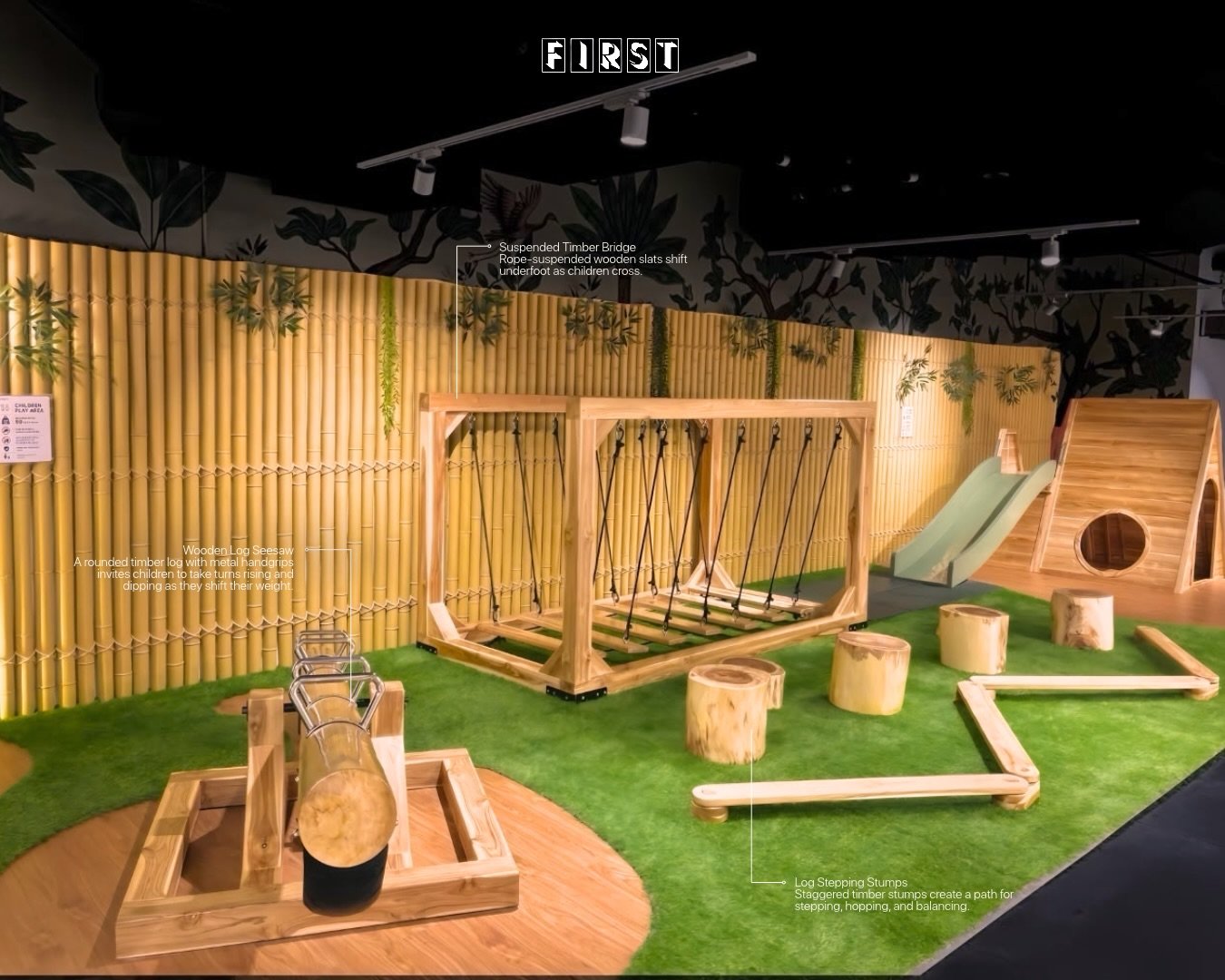
A recognizable identity in indoor-outdoor playground design starts with a few shared cues, while furniture and play structures take different forms for different activities. ANNAJON Lifestyle, shared on FIRST Indonesia’s Instagram, pairs a jungle theme with timber-toned features across its indoor play, lounge and garden settings. FIRST Indonesia worked with local makers to custom-build the lounge tables and woven-cane sideboard; the indoor play setting includes a suspended slatted bridge, stepping stumps and an A-frame playhouse with a pale green slide.
Repeat the theme, not the furniture arrangement
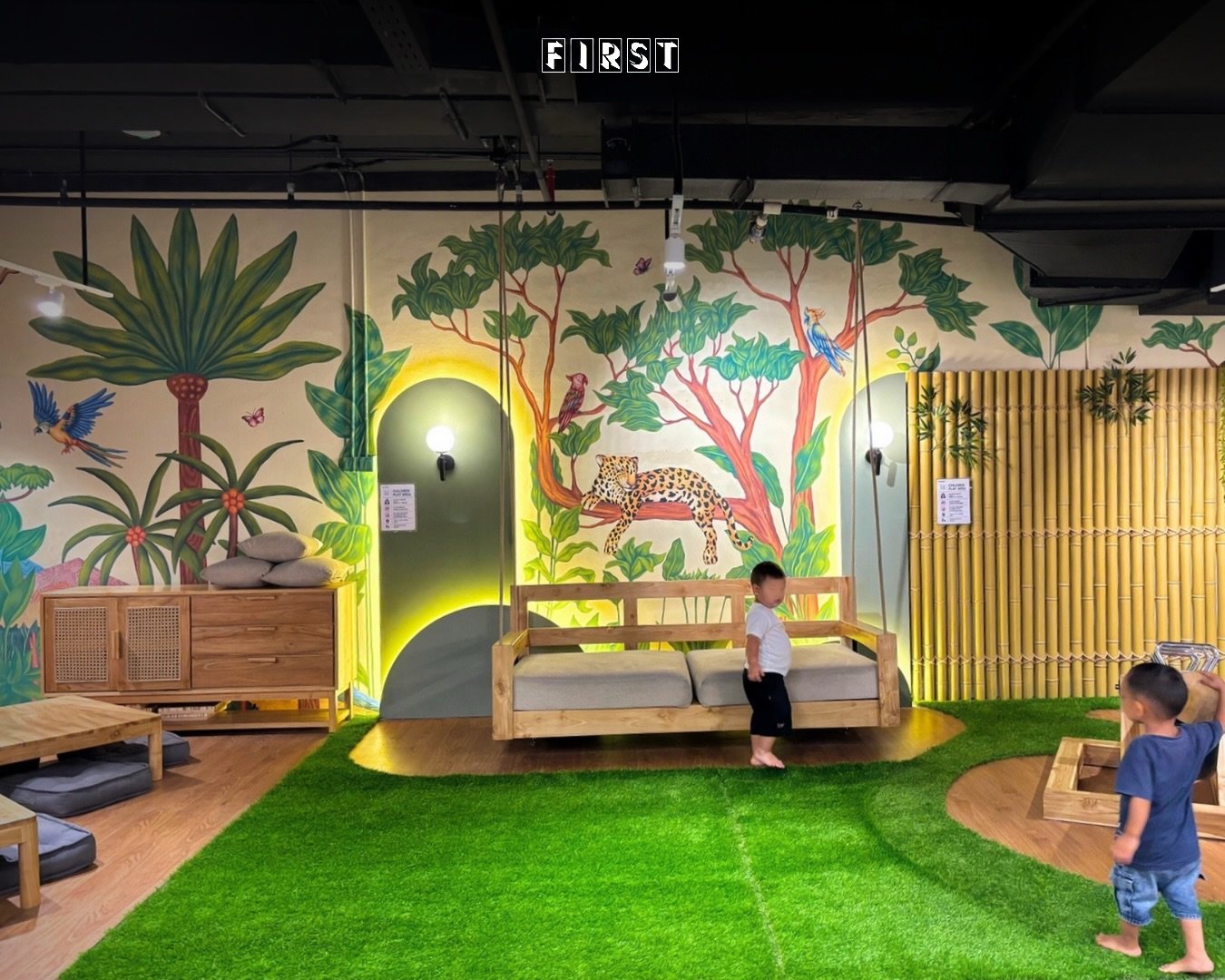
Give play and lounge settings a shared palette without requiring them to use the same shapes or arrangements. At ANNAJON Lifestyle, pale wood tones recur in both the play structures and low lounge tables, while illustrated foliage carries the jungle theme across the walls. The lounge uses gray floor cushions rather than repeating the sculptural forms of the play equipment.
Choose which elements should stay visually quiet when the backdrop is detailed. ANNAJON Lifestyle’s rectangular tables and sideboard have simple outlines against a mural filled with foliage, birds and a spotted cat. For your own brief, decide whether the mural, furniture or equipment should draw attention first, then keep the other elements restrained.
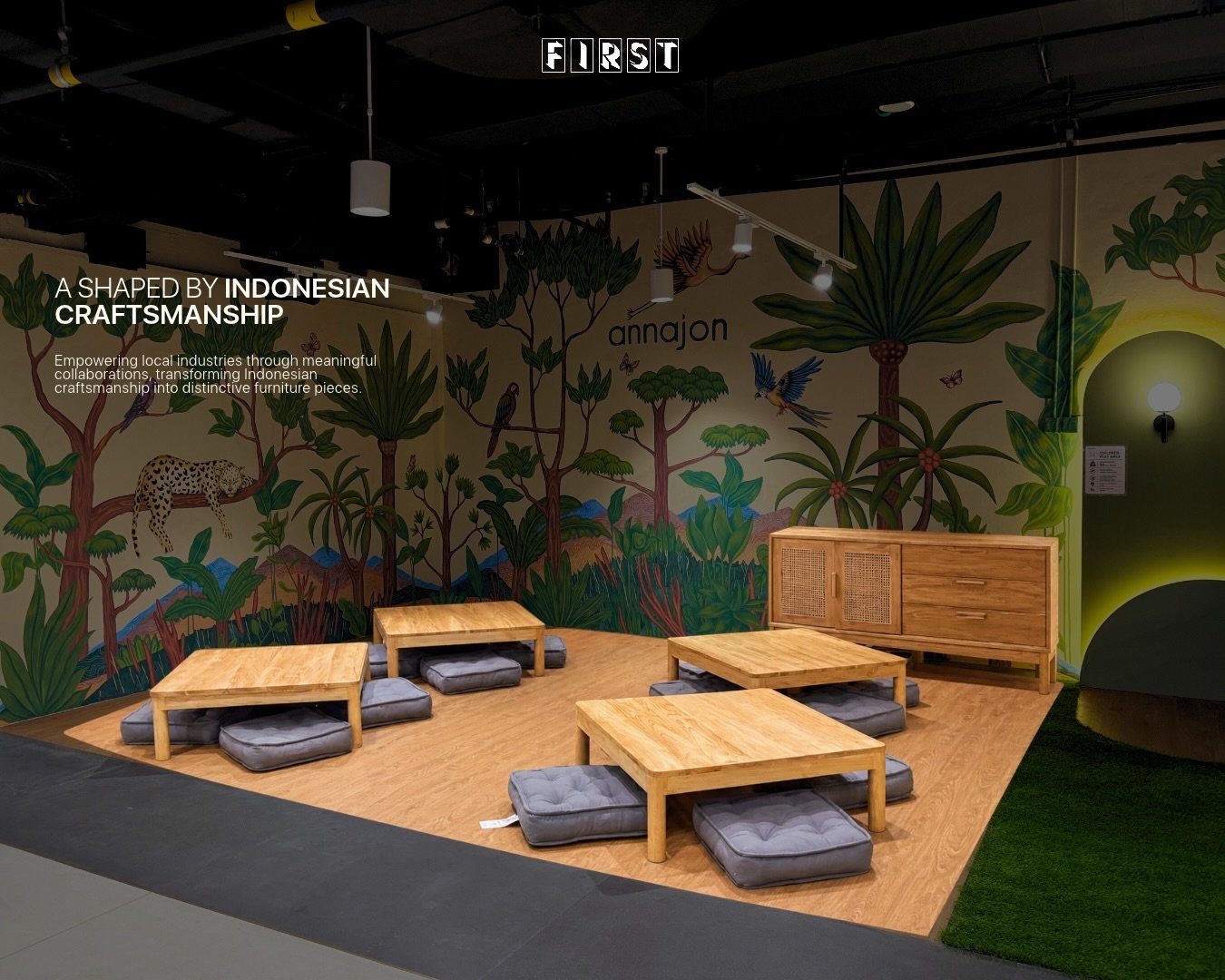
Specify seating by how you want it to be used, not simply by its appearance. Low tables with floor cushions and a suspended bench are distinct arrangements at ANNAJON Lifestyle, even though both repeat wood tones and gray upholstery. When briefing a designer, discuss seat height, table access, cleaning and the placement of movable cushions separately from the theme.
Carry the identity outdoors without copying the interior
Repeat selected colors and forms outdoors rather than reproducing every indoor decorative feature. ANNAJON Lifestyle’s garden pairs a timber-toned tower and green slide with swings, stepping stumps and a cylindrical tunnel. Trees and dense planting provide a different expression of the nature theme from the illustrated indoor walls.
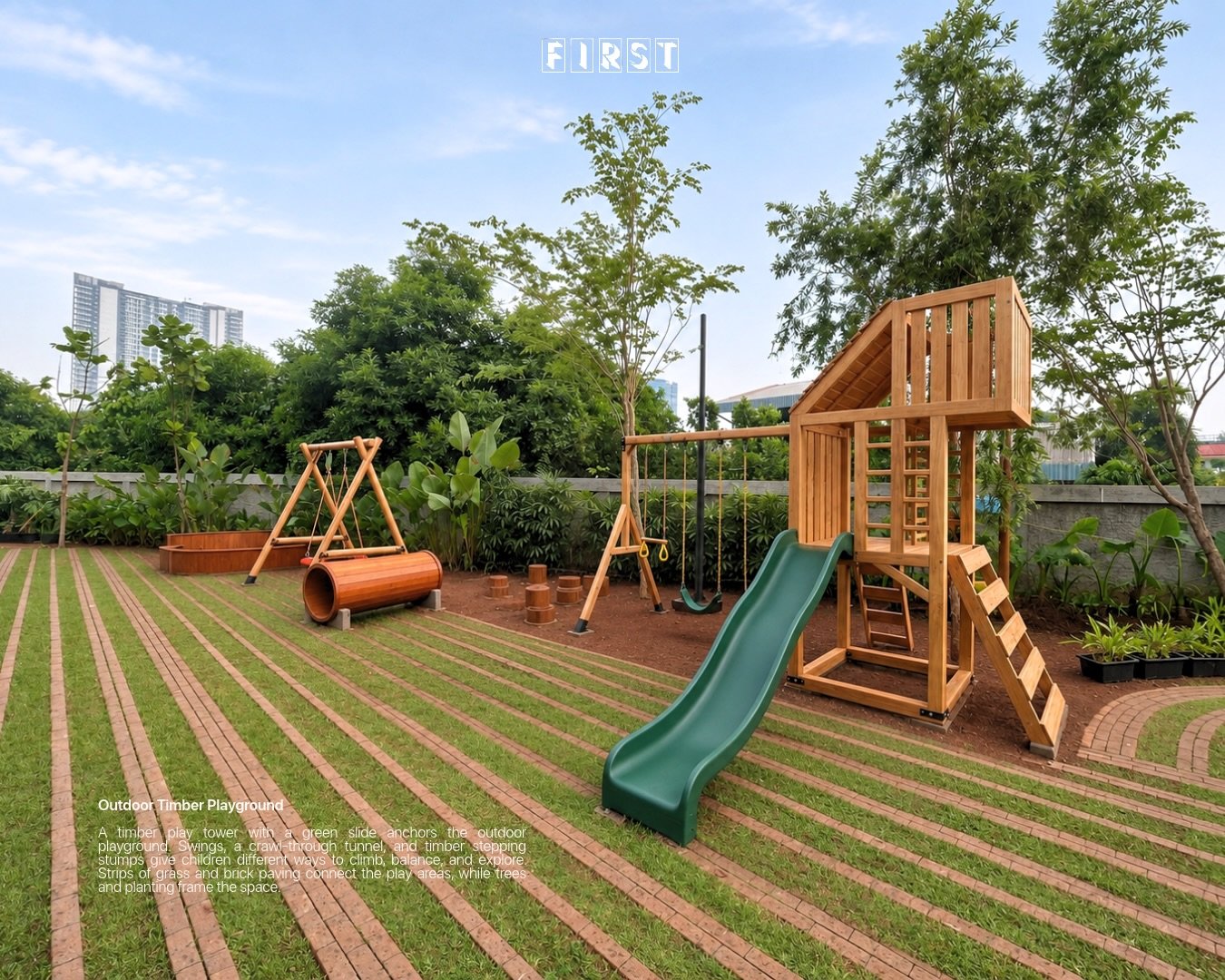
Separate the visual brief from the outdoor specification. A matching appearance is only part of choosing garden furniture and play equipment; ask suppliers about exposure, cleaning, inspection and maintenance requirements as well. Coordinate those requirements with the landscape plan rather than choosing outdoor pieces solely because they resemble the indoor ones.
Give each setting a clear focal point
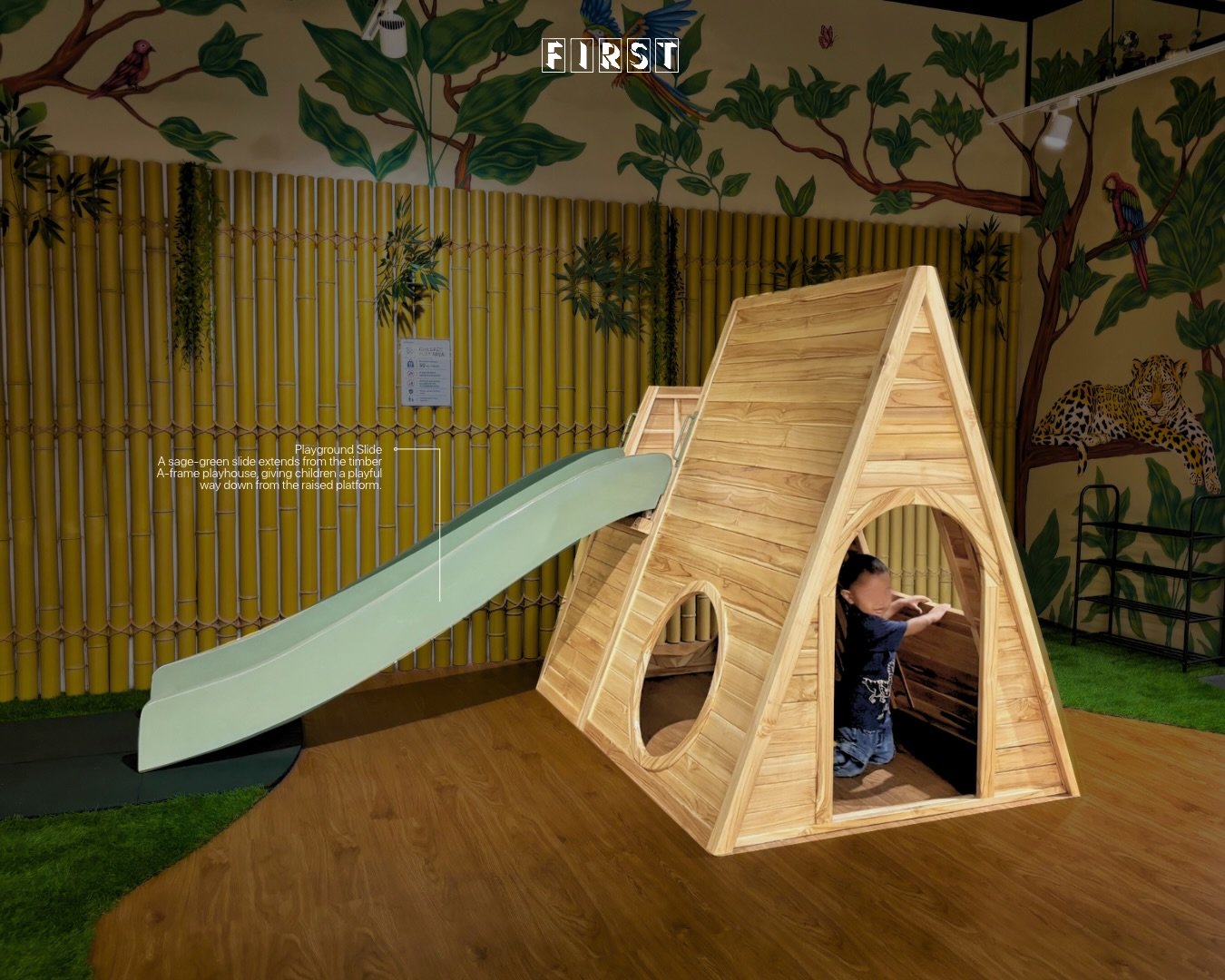
Choose a dominant feature for each setting instead of making every surface compete for attention. ANNAJON Lifestyle’s indoor A-frame playhouse reads as a focal point through its peaked silhouette, arched entrance and round side opening. Its pale green slide repeats the green palette without copying the mural’s detailed imagery.
Review the theme and activity requirements together before approving individual pieces. Ask your designer and equipment suppliers:
- Which colors, finishes or motifs should repeat across play and lounge settings?
- Which feature should stand out in each setting, and which details should remain quieter?
- What seating arrangements suit the activities you plan to accommodate?
- What installation, inspection and maintenance requirements need separate specialist review?
The takeaway from ANNAJON Lifestyle is to keep the identity consistent without making every setting identical. Repeat a restrained set of visual cues, let each activity determine its furniture or equipment, and adapt the theme to the indoor backdrop or outdoor planting.